
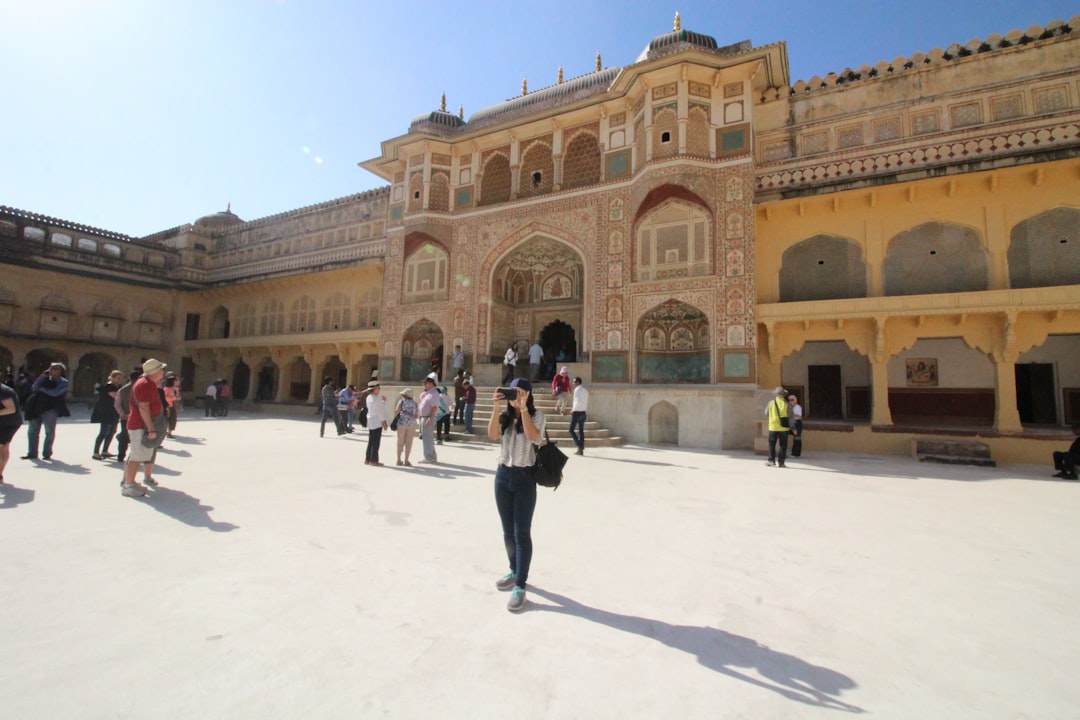

As you approach the Amer Fort, the first thing that strikes you is its imposing structure, nestled against the backdrop of the Aravalli hills. The fort, built in the 16th century, is a stunning example of Rajput architecture, characterized by its intricate carvings and expansive courtyards. You can almost feel the history echoing through its walls as you walk through the grand entrance, known as the Suraj Pol.
The fort's design is a harmonious blend of Hindu and Mughal styles, which reflects the cultural amalgamation that defines Rajasthan. Once inside, you are greeted by a series of beautifully decorated halls and chambers. The Sheesh Mahal, or Hall of Mirrors, is particularly captivating; as you gaze at the countless tiny mirrors embedded in the walls, you can imagine how they would have sparkled in the flickering candlelight of a bygone era.
The fort also offers breathtaking views of the surrounding landscape, with the Maota Lake shimmering below. As you explore the various sections of the fort, from the Diwan-i-Aam to the Diwan-i-Khas, you can’t help but feel a sense of awe at the architectural brilliance and historical significance of this majestic structure.
Key Takeaways
- Amer Fort offers stunning views of the surrounding hills and a glimpse into the royal history of Rajasthan.
- City Palace is a grand complex of courtyards, gardens, and buildings showcasing the rich heritage of Jaipur.
- Hawa Mahal is a splendid architectural marvel with its unique honeycomb design and intricate lattice work.
- Govind Dev Ji Temple is a sacred place of worship dedicated to Lord Krishna and a hub of spiritual activities.
- Jal Mahal is a beautiful palace surrounded by the Man Sagar Lake, offering a serene and picturesque setting.
The Grand City Palace
Your journey through Jaipur would be incomplete without a visit to the Grand City Palace. This sprawling complex, which serves as a royal residence, is a testament to the opulence and grandeur of Rajasthan's royal heritage. As you step through its gates, you are transported into a world of regal splendor.
The palace is a fusion of traditional Rajasthani and Mughal architecture, with intricate latticework and vibrant frescoes adorning its walls. Each room tells a story, and as you wander through the courtyards and halls, you can almost hear the whispers of history. One of the highlights of your visit is the museum housed within the palace complex.
Here, you can marvel at an impressive collection of artifacts, including royal costumes, weapons, and paintings that depict the rich culture of Jaipur. The Chandra Mahal, which still serves as the residence of the royal family, offers stunning views of the city from its balconies. As you stand there, taking in the panoramic vistas, you can appreciate how this palace has been a witness to centuries of history and tradition.
The Splendid Hawa Mahal
The Hawa Mahal, or Palace of Winds, is an architectural marvel that captures your imagination from the moment you lay eyes on it. With its unique façade resembling a honeycomb structure, this five-story palace was designed to allow royal women to observe street festivities without being seen. As you approach this iconic landmark, you can’t help but admire its intricate latticework and vibrant pink sandstone that glows in the sunlight.
Once inside, you can explore a series of small chambers connected by narrow corridors. Each window offers a different perspective of the bustling streets below, allowing you to experience Jaipur's vibrant life from a unique vantage point. The cool breeze that flows through the numerous jharokhas (balconies) provides a refreshing respite from the heat outside.
As you stand there, absorbing the beauty and history of Hawa Mahal, it becomes clear why this palace is one of Jaipur's most photographed landmarks.
The Sacred Govind Dev Ji Temple
Your exploration of Jaipur would not be complete without visiting the sacred Govind Dev Ji Temple. This revered shrine is dedicated to Lord Krishna and holds immense significance for devotees. As you approach the temple, you can feel an air of spirituality enveloping you.
The temple's architecture is striking, with intricate carvings and vibrant murals that depict various tales from Hindu mythology. Inside, the atmosphere is filled with devotion as worshippers gather to offer their prayers and seek blessings. You may find yourself swept up in the fervor of the rituals taking place around you.
The melodic chants and ringing bells create an ambiance that is both serene and uplifting. As you stand before the idol of Govind Dev Ji, adorned with beautiful garments and flowers, you can’t help but feel a deep sense of connection to something greater than yourself.
The Beautiful Jal Mahal
As you make your way to Jal Mahal, or Water Palace, you are greeted by a breathtaking sight: a stunning palace rising majestically from the center of Man Sagar Lake. This architectural gem appears to float on water, surrounded by lush greenery and distant hills. The palace was originally built as a retreat for royal family members and offers a picturesque escape from the hustle and bustle of city life.
You can take a leisurely stroll along the lakeside promenade, where you can enjoy panoramic views of Jal Mahal against the backdrop of a vibrant sunset. The reflection of the palace in the water creates a mesmerizing scene that is perfect for photography enthusiasts. While access to the palace itself is limited, simply being in its presence allows you to appreciate its beauty and historical significance as a symbol of Jaipur's royal past.
The Historic Jantar Mantar
Your journey through Jaipur would be incomplete without visiting Jantar Mantar, an astronomical observatory that showcases India's rich scientific heritage. As you enter this UNESCO World Heritage site, you are greeted by an array of impressive instruments designed for measuring time and celestial positions. Built in the 18th century by Maharaja Sawai Jai Singh II, this observatory reflects his passion for astronomy and his desire to advance scientific knowledge.
As you explore the various structures within Jantar Mantar, such as the Samrat Yantra and Jai Prakash Yantra, you can’t help but marvel at their precision and ingenuity. Each instrument serves a specific purpose, allowing astronomers to track celestial bodies with remarkable accuracy. Standing amidst these ancient tools, you gain insight into how science and art intertwined during this period in history.
It’s an experience that deepens your appreciation for Jaipur’s contributions to both culture and knowledge.
The Serene Sisodia Rani Garden
Nestled on the outskirts of Jaipur lies Sisodia Rani Garden, a serene oasis that offers a peaceful retreat from the city's hustle and bustle. As you enter this beautifully landscaped garden, you are greeted by vibrant flowers, cascading fountains, and intricately designed pathways that invite exploration. This garden was built in honor of Maharaja Sawai Jai Singh II's queen and serves as a testament to love and devotion.
As you stroll through the lush greenery, take a moment to appreciate the stunning views of the surrounding hills. The garden's terraced layout creates an enchanting atmosphere where you can relax and unwind amidst nature's beauty. You may find yourself captivated by the colorful blooms and fragrant scents that fill the air.
Whether you're seeking solitude or simply want to enjoy a leisurely afternoon surrounded by nature, Sisodia Rani Garden provides an idyllic escape.
The Vibrant Bapu Bazaar
No visit to Jaipur would be complete without immersing yourself in its vibrant markets, and Bapu Bazaar is one of the best places to experience local culture firsthand. As you wander through this bustling marketplace, your senses are awakened by an array of colors, sounds, and aromas. From traditional textiles to handcrafted jewelry, Bapu Bazaar offers an eclectic mix of goods that reflect Rajasthan's rich heritage.
You can spend hours exploring stalls filled with vibrant fabrics adorned with intricate patterns and designs. Don’t forget to haggle with local vendors; it’s all part of the experience! As you navigate through crowds of enthusiastic shoppers and friendly shopkeepers, you'll find yourself drawn into conversations about local customs and traditions.
Sampling street food along the way adds another layer to your adventure—try some delicious kachoris or sweet lassi for an authentic taste of Jaipur.
The Charming Nahargarh Fort
Perched atop a hill overlooking Jaipur is Nahargarh Fort, a charming fortress that offers breathtaking views of the city below. As you make your way up to this historic site, you'll be captivated by its picturesque setting amidst rugged hills and lush landscapes. Built in 1734 as a retreat for royalty, Nahargarh Fort exudes an air of romance and nostalgia.
Once inside, take your time exploring its winding pathways and beautifully decorated rooms. The fort's architecture reflects a blend of Indian and European styles, making it unique among Jaipur's many forts. As you stand on one of its terraces gazing out over Jaipur at sunset, you'll understand why this location was favored by kings for leisurely escapes.
The panoramic views are nothing short of spectacular—a perfect backdrop for capturing memories during your visit.
The Picturesque Galta Ji Temple
A short drive from Jaipur leads you to Galta Ji Temple, also known as Monkey Temple due to its resident monkey population. This sacred site is nestled within rocky hills and features stunning architecture adorned with intricate carvings and frescoes depicting Hindu deities. As you approach Galta Ji Temple, you'll be greeted by playful monkeys swinging from trees—an amusing sight that adds to the charm of this spiritual destination.
The temple complex consists of several shrines dedicated to various gods and goddesses, with natural springs flowing through it creating serene water bodies for devotees to bathe in. You may choose to join locals in their rituals or simply enjoy quiet moments reflecting on your surroundings amidst nature’s beauty. Climbing up to higher viewpoints within Galta Ji offers breathtaking vistas over Jaipur—a rewarding experience that makes your visit truly memorable.
The Cultural Chokhi Dhani Village
To truly immerse yourself in Rajasthani culture during your visit to Jaipur, make sure to spend an evening at Chokhi Dhani Village—a vibrant cultural village that showcases traditional Rajasthani life. As soon as you enter this enchanting space designed like a village setting complete with mud huts and colorful decorations—you’ll feel transported back in time. The evening unfolds with various cultural performances including folk dances like Ghoomar and Kalbeliya along with live music that fills the air with joyous melodies inviting everyone to join in on celebrations!
You can also indulge in authentic Rajasthani cuisine served on traditional thalis—an experience that tantalizes your taste buds while giving insight into local culinary traditions. Chokhi Dhani Village offers more than just entertainment; it’s an opportunity for cultural exchange where visitors can interact with artisans showcasing their crafts such as pottery making or weaving textiles—providing deeper appreciation for Rajasthan’s rich heritage! As night falls over Chokhi Dhani illuminated by twinkling lights—you’ll leave feeling enriched by unforgettable memories created during this immersive experience into Rajasthan’s vibrant culture!